

August 20, 2026
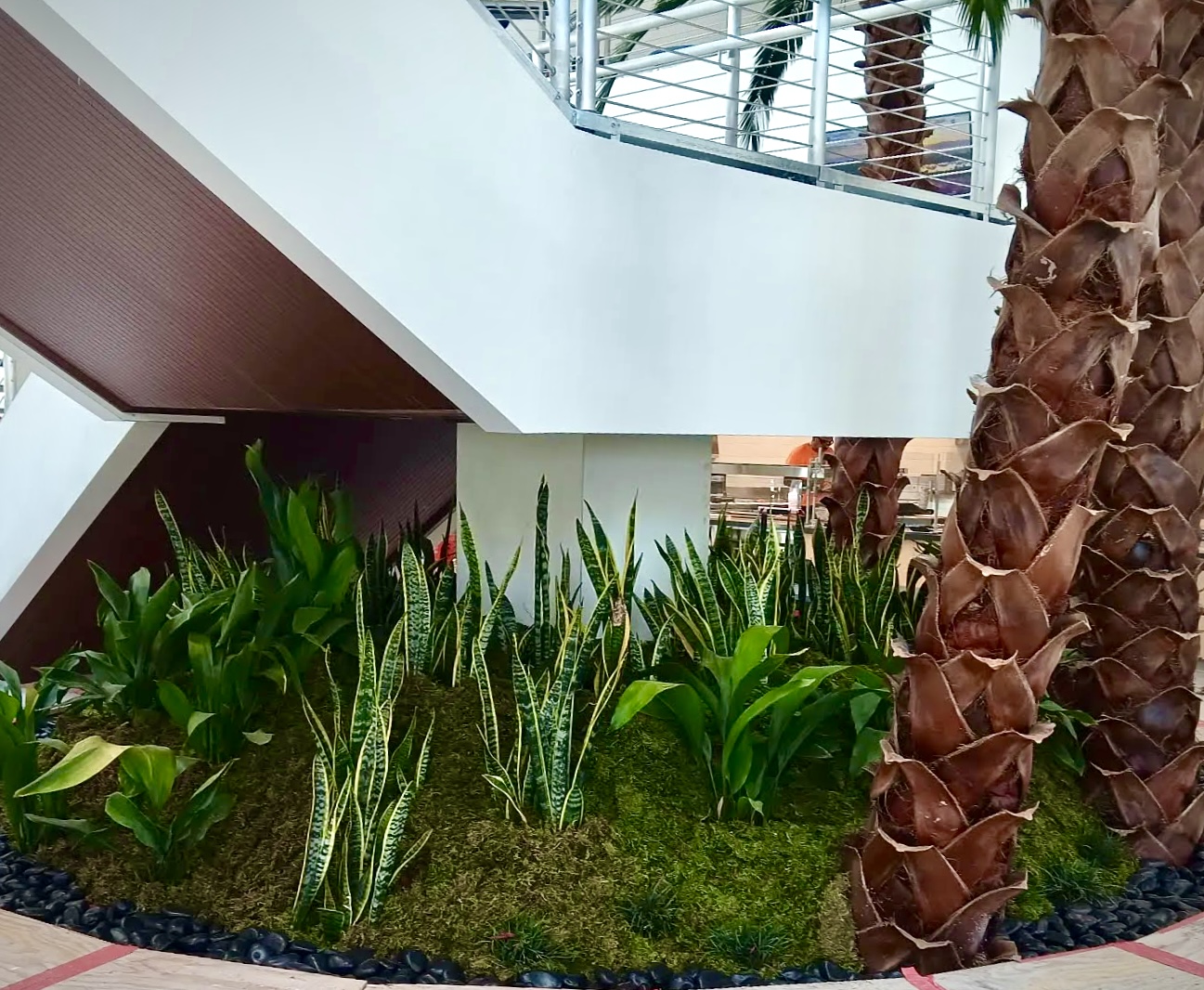
Not every landscape installation starts with living plant material.
Recently, our team had the opportunity to work on a particularly unique project: an installation created entirely with artificial plant material. It was a different type of project for EarthCo and a great example of how landscape solutions can be tailored to the specific needs and vision of a space.
The result was a polished, intentional look that delivered the appearance of greenery without the maintenance requirements associated with traditional planting.
While living plants remain an important part of landscape design, artificial plant material can offer a practical alternative in the right environment. Choosing between artificial and real plants ultimately comes down to the needs of the space, the desired appearance, and long-term maintenance considerations.
Why Choose Artificial Plant Material?
Artificial plants have come a long way in both appearance and quality. When thoughtfully selected and professionally installed, they can provide color, texture, and greenery in spaces where maintaining living plant material may be challenging.
Because artificial plants do not require irrigation, pruning, fertilization, or seasonal replacement, they can provide a more consistent appearance throughout the year with significantly less ongoing maintenance. They can also be useful in areas where sunlight, growing conditions, or access make maintaining living plant material more difficult.
For the right space, artificial plant material can be an effective way to create a finished landscape look while simplifying long-term care.
When Are Real Plants the Better Choice?
Living plants provide benefits that artificial materials cannot fully replicate. They change with the seasons, contribute natural texture and movement, and allow a landscape to develop and mature over time.
When an environment provides appropriate sunlight, irrigation, soil conditions, and room for plants to grow, live plant material may be the preferred option.
The key is choosing plants that are appropriate for the specific property and creating a maintenance plan that supports their long-term health and appearance.
Artificial vs. Real Plants: There Is No One-Size-Fits-All Answer
Landscape design does not always require choosing one approach for every area of a property.
The best solution depends on how a space is used, its environmental conditions, maintenance expectations, and the overall design goals for the property. In some situations, artificial plant material can solve a specific challenge. In others, traditional planting provides the most natural and effective result.
What matters most is selecting materials intentionally and choosing an approach that works for the individual space.
Installation Still Matters
Artificial plants may not require watering or pruning, but the quality of the installation still makes a major difference in the finished result.
Placement, spacing, proportion, and attention to detail all contribute to whether an installation feels natural and cohesive within the surrounding landscape.
For this unique project, our team approached the installation with the same level of care we bring to traditional plant material. Working with an entirely artificial plant palette made the project different from a typical installation, but the standard remained the same: thoughtful placement, careful execution, and a clean, consistent finished result.
It was a unique opportunity to bring a different landscape concept to life while demonstrating the flexibility that thoughtful landscape solutions can provide.
At Earthco, we evaluate each landscape based on the needs of the property and look for solutions that support both its appearance and long-term goals.
Have a unique landscape challenge? Contact Earthco to explore the right approach for your property.
